Addressing Phosphorus Sustainability: Challenges and Opportunities Through the Lens of the African Continent
By Jehangir (Jango) Bhada
Associate Professor
University of Florida
Phosphorus is an essential nutrient for animals, plants, and microbes; however, it could potentially harm the environment and its inhabitants when it is mined and used in unsustainable ways. It is estimated that > 40% of the world's arable land suffers from phosphorus deficiency, and finite rock phosphate sources could deplete in 100-200 years. Thus, establishing harmony between agriculture and the environment is critical. The 8th Global Sustainable Phosphorus Summit (SPS8) was held from September 30-October 3, 2025, on the continent of Africa for the very first time. Accra, Ghana was the venue, where SPS8 focused its attention on priority actions for achieving sustainable phosphorus management in Africa and globally. The summit enabled communities and sectors to work together, fostering new opportunities for collaboration, innovation, and capacity-development.
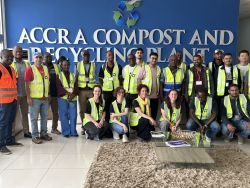 As part of the NSF-funded Science and Technologies for Phosphorus Sustainability (STEPS) Center, a team of researchers and scholars from United States presented their research initiatives on the topic of phosphorus sustainability and circularity. Over four days, attendees got to engage in plenary sessions on six phosphorus challenges – (1) Global Food Security: Increasing phosphorus use efficiency in food production systems; (2) Fertilizer Access and Use: Improving access and benefits of phosphorus fertilizers and addressing imbalances in fertilizer use; (3) Managing and Mitigating Impacts: Reducing phosphorus pollution impacts on biodiversity and human health; (4) Interactions: Understanding and mitigating the interactions among phosphorus, nitrogen, carbon, and climate; (5) Sustainable futures: Sustainable sourcing of phosphorus for future generations; (6) Global governance: Towards effective global governance of phosphorus. In addition to being treated with gracious African hospitality, cuisine, and subtropical weather, attendees also had the opportunity to visit one of three field trips planned by the organizers – (1) Accra Compost and Recycling Plant; (2) Volta River Authority; and (3) Cocoa Research Institute Ghana. Delegates were also involved in one of three working groups related to (1) Drafting a Phosphorus Action Plan for Africa; (2) Developing a Global Phosphorus White Paper; or (3) Early Career Researchers Co-creating Articles. These working group activities were extremely informative, hands-on, and stimulative. The groups were diverse, not just geographically but also in expertise. Through a series of facilitated discussions and group activities and collaborations attendees will continue working on defining phosphorus sustainability across the African landscape, and what socioeconomic "success" could look like for this unique and rapidly changing region and explore what it would take to get there.
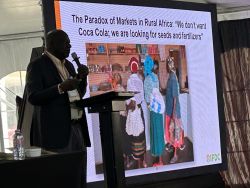 The summit was an opportunity to meet old colleagues and foster some new connections; it was about growing from mistakes made over the past decades and lessons learned, paving a path of opportunity for African countries to better manage this very vital natural resource, the fifteenth element on the periodic table, discovered in 1669 by German alchemist Hennig Brand in an attempt at creating the “philosophers stone”. While there was no confirmation regarding date and venue for SPS9, the delegation from Japan did share a statement of interest to host the next meeting. Hope to see you there!