Amazing professional development trip to Guatemala supported by ANREP!
By Angela Gupta
University of Minnesota
The University of Minnesota Extension's Director of Global Initiatives organized a 12-day trip for 13 UMN Extension staff from all of the major programming areas. This trip was the culmination of almost a year of professional development to: strengthen cross-department relationships; build cultural agility; strengthen existing international partnership with Guatemala; increase knowledge and skill of how to build and execute an international education program; and advance inclusion within Extension.
 The trip was a whirlwind of introductions, group meals, content learning, mountain travel, presentations in Spanish, networking, some sightseeing and lots of bonding for UMN staff. We both left and returned during the federal government shutdown yet, with special permission from the US Ambassador, we visited the Embassy and met staff to learn about the US Federal Government's work in Guatemala. It was also a stark reminder of recent policy changes to see the whole floor of former USAID offices empty. The quick removal of USAID funding was a recurring theme at almost every site visit and Extension-like partner visit.
Much of the trip was organized in close collaboration with the University of San Carlos, their Director of University Outreach and EPSUM (akin to Extension) staff. We visited the EPSUM university building (similar to Extension's main administrative home on central campus) and met with staff that would, later in the trip, lead us on site visits in rural Guatemala. The University of San Carlos was founded in 1676. It's an impressive institution and legacy that is nationally funded. We also visited UVG established in 1966 when private universities were permitted in Guatemala. UVG was founded with funding from a private, US-based foundation. Contrasting the programs and approaches of the historic and nationally funded university and the new privately funded UVG was interesting. Both did some Extension-esque work, but EPSUM's was definitely more established and institutional.
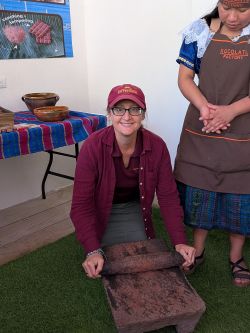
During the middle of the trip the group split into two and visited different cities and sites with unique focuses. In all I visited: Guatemala City,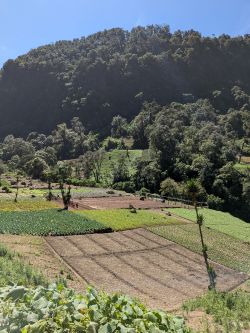 Quetzaltenango (also known as Xelo in the local Mayan language), Chichicastenango and Lake Atitlan. We toured several farms practicing various types of agroforestry and engaged with several cooperatives working on producing, storing and marketing apples, cocoa (chocolate), textiles and honey. I learned there's a native, non-stinging honey bee in Guatemala!
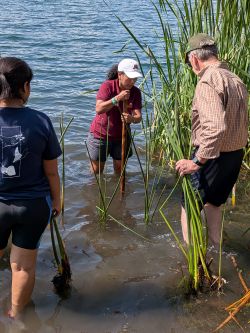
As an Extension Forester my favorite stop was a visit to a recently replanted patch of montane forest. After a long and bouncy pick-up truck ride, we emerged into a small forest opening with many recently planted seedlings. It was important to the site leaders that we understand the species they'd planted. Our interpreter was struggling with tree species names until a student-Extension leader and I started using iNaturalist to confirm identification and overcome the language barrier. We correctly identified various oak, pine, alder and other species they planted. I realized they, like us in Minnesota, are experimenting and planning near-native species in preparation for the changing climate. It was super interesting how similar their approach is to ours. Also, some of Minnesota's near-native species have huge ranges and are native to Guatemala, including sweetgum! I was able to solve another mystery: Where were all the animals? I don't think we saw a single non-domesticated mammal on the whole trip. We saw mostly stray dogs. None of the young seedlings were protected with fencing or tree tubes. I came to understand there is currently very little native fauna likely because it's been eaten through decades of Guatemalan civil unrest and migration. This was both surprising and yet it explained a lot.
 Overall it was a great trip during which I learned a lot and hope to continue to build on connections and knowledge gained during this amazing experience. Thank you for supporting this activity!
All photos were taken by A. Gupta, UMN Extension.