Invasive Plant Removal and Habitat Restoration at Carrollwood Village Park
By Tia Saracino
UF/IFAS Extension Hillsborough County
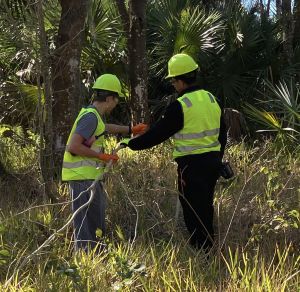
Students from Gathier High School ROTC program removing invasive species. Photo: Tia Saracino, UF/IFAS.
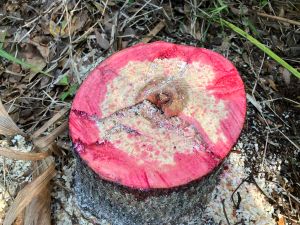
Invasive trees were stump cut and treated with herbicide to prevent regrowth. Photo: Tia Saracino, UF/IFAS.
A major habitat restoration initiative is underway at a 1.1 acre woodland site in Carrollwood Village Park in Tampa, FL, where UF/IFAS Extension Hillsborough County, local park management, and community partners are working to remove invasive plant species and restore native vegetation. Supported by a bay mini-grant from the Tampa Bay Estuary Program, the project focuses on improving ecosystem health, enhancing wildlife habitat, and engaging the community in hands-on environmental stewardship.
The effort began with an educational session on how invasive species disrupt ecosystems by reducing biodiversity, altering habitat structure, and out competing native plants. Extension Agent, Tia Saracino, provided an overview for volunteers before Damon Moore of Oyster River Ecology led training on safe and effective removal techniques.
A team of 20 high school ROTC students, Master Gardener Volunteers, and park staff collaborated to remove several invasive species of concern, including Brazilian peppertree, Chinese tallow, Caesar’s weed, camphor, and skunk vine. Smaller plants were manually extracted, while larger trees were stump cut and treated with an herbicide containing triclopyr to prevent regrowth. The team removed approximately 89 trees—ranging from young saplings to mature 40 foot specimens—totaling an estimated 2,100 pounds of biomass.
A second volunteer workday is scheduled to complete the removal of invasive plants and the project will conclude in November 2026 with a final community planting event featuring native species such as cannas, wax myrtle, and other plants that support local wildlife. Funding comes from the Tampa Bay Estuary Program’s “Tarpon Tag” license plate program, which invests in initiatives that restore and protect native ecosystems in the Tampa Bay Watershed.